
Begin with the cause of your hair loss
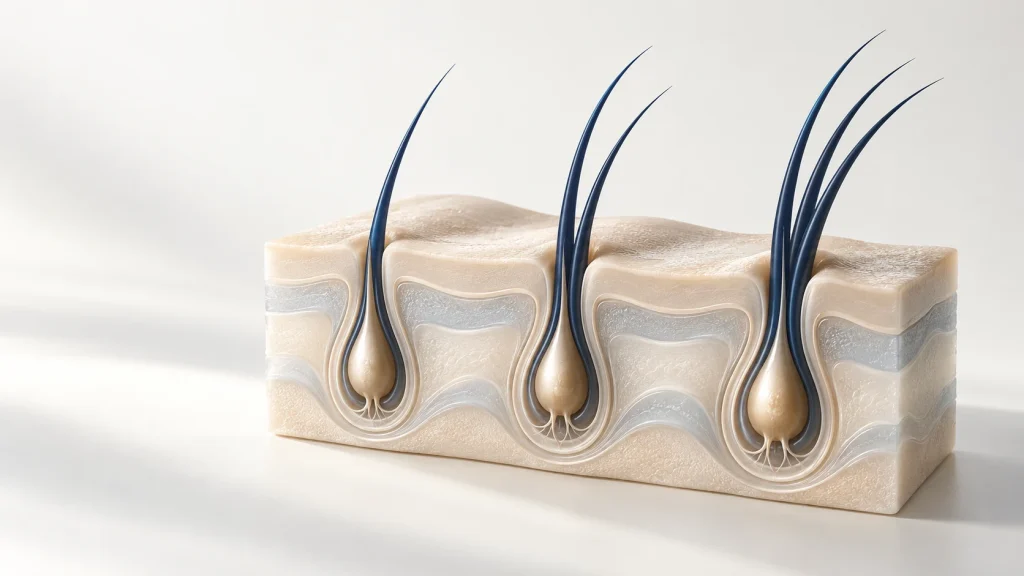
Hair transplantation moves small pieces of tissue called grafts, each containing one or more hair follicles, from the donor area to the area being treated, known as the recipient area. It redistributes existing hair; it does not create new follicles. Whether it is appropriate depends on the reason for your hair loss and an individual clinical assessment.
Hair loss can have different causes. A clinician may need to examine your scalp, discuss changes over time and review your medical history before recommending treatment. Some people need further investigation or treatment of an underlying condition. Surgery may be inappropriate or may need to be delayed.
Bring questions about your goals, previous treatment and how your hair loss has changed. A useful consultation should leave you understanding the options, including the option of not proceeding with surgery.
Donor hair and realistic expectations
The donor area supplies the grafts used in a transplant. Its capacity is limited. Planning should consider the amount and characteristics of available hair, the area you want to treat and the possibility of further hair loss.
A proposed graft number needs clinical context. Ask why that number is recommended, which areas it is intended to address and what limitations remain. A higher advertised number does not by itself tell you whether a plan is appropriate.
How grafts are collected and placed
Follicular unit excision (FUE), also commonly called follicular unit extraction, involves removing individual follicular units from the donor area. Strip harvesting, commonly called follicular unit transplantation (FUT), involves removing a strip of hair-bearing scalp that is then divided into grafts. These terms describe different approaches to harvesting grafts.
Placement is another stage of the procedure. Grafts may be placed using different instruments and workflows. The term direct hair implantation (DHI) is often used in marketing for implanter-assisted placement; it should not be understood as proof of a separate, superior or incision-free operation. Ask the clinician to explain the harvesting and placement steps in plain language.
These are general explanations of terminology, not a statement that a particular provider offers every method.
Consider the alternatives
Depending on the diagnosis, options may include medical treatment, monitoring, cosmetic camouflage, hair systems or no treatment. Each choice has different implications. Medicines are not suitable for everyone and should be discussed with an appropriately qualified professional. This page does not recommend a medicine or dosage for you.
Know the clinical roles
Before agreeing to treatment, establish who will assess you, who will perform each surgical stage and who will take responsibility for follow-up. Ask for the names, professional roles and relevant qualifications of the people involved. Administrative coordination and clinical decision-making are different responsibilities.
Check the professional and facility records that apply in the country where treatment will take place. A brand name, a society membership or a photograph cannot by itself verify every clinical role.
choosing a hair transplant surgeon
What happens before a procedure
A proposed plan should describe the areas to be treated, the likely limitations, the people involved and the aftercare arrangements. You should have an opportunity to discuss risks and ask questions before giving consent.
Confirm whether an initial discussion is administrative, an initial clinical consultation or a full in-person assessment. Photographs alone may not provide all the information needed to make a final decision.
Risks and limitations
Hair transplantation is surgery. Risks include bleeding, infection, scarring and reactions to anaesthetic medicines. Some grafts may not grow as expected, and the appearance may differ from what you hoped for. Existing hair can continue to thin after treatment.
The clinician should explain the risks that are relevant to you, how complications would be managed and whether additional treatment might be needed. No website can promise an individual result.
Recovery and hair growth
Recovery involves looking after both the donor and recipient areas. Your treating clinician should provide personalised instructions about washing, activity, medicines and follow-up. Early shedding can occur, and visible growth develops gradually rather than immediately.
Discuss when you can return to work, exercise and travel with your treating clinician. General timelines are not permission to restart an activity before your treating clinician advises it.
Read about aftercare and recovery
Questions for your consultation
- What is the likely cause of my hair loss?
- Why is surgery being considered, and what are the alternatives?
- How will the donor area be assessed and protected in the treatment plan?
- Who will perform each surgical stage?
- What result is realistic, and what uncertainty remains?
- What care is available if I have a complication or need further review?